USD $ | United States
If you've ever come across an email address ending in @163.com, or stumbled on a Chinese website with that unusual number-based name, you've probably wondered: what is 163.com? The short answer is that 163.com is one of China's oldest and most widely used internet platforms, best known for its free email service. But there's a lot more to the story of how a simple domain name became a household name for hundreds of millions of people. This article breaks down what 163.com is, its history, its features, and why it remains so popular today.
What is 163.com?
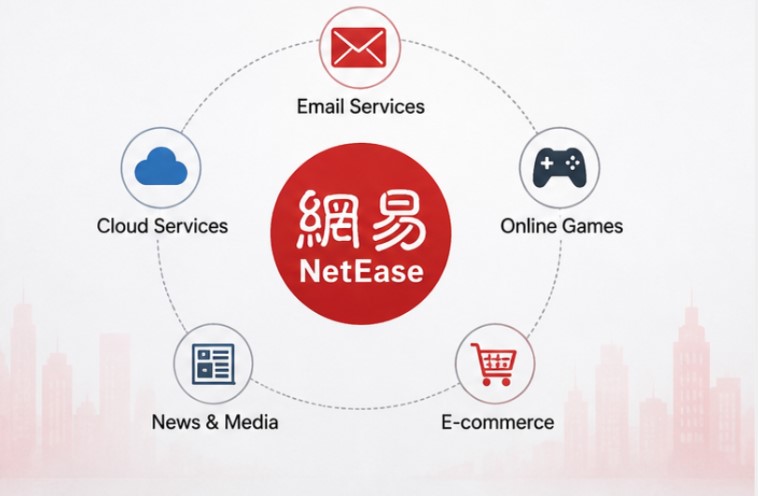
163.com is a major Chinese internet portal and email service operated by NetEase, Inc., one of China's largest technology companies. Headquartered in Hangzhou, NetEase built 163.com into a multifaceted platform offering email, news, gaming portals, and other digital services. While NetEase itself has grown into a diversified company spanning online gaming, music streaming, e-commerce, and education, the 163.com domain remains most recognized worldwide as the home of NetEase Mail — one of the largest free email providers on the planet.
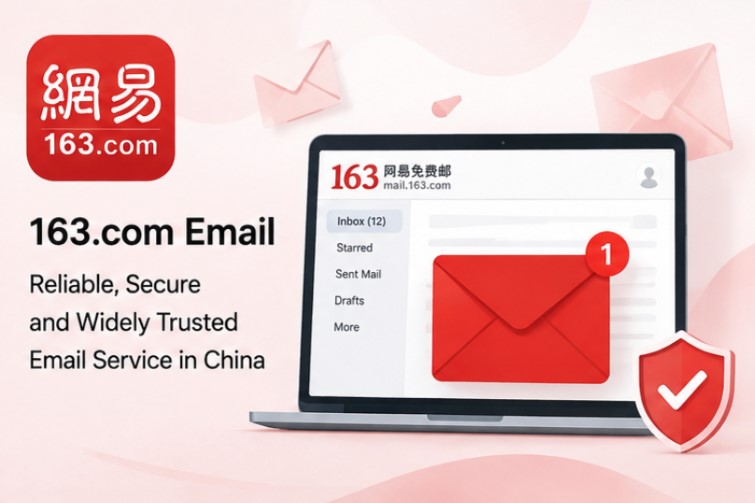
So when people ask "what is 163.com," the most accurate answer is this: it's NetEase's flagship online platform, and specifically its email service, which has become deeply embedded in Chinese digital life since the late 1990s.
The Origin Story: Why "163"?
The name 163.com has an interesting backstory rooted in China's early internet history. Before broadband became widely available, Chinese internet users had to dial a specific access number — "163" — to connect to the internet through dial-up services. NetEase adopted this number as its domain name, and it stuck, becoming a recognizable and memorable brand even after dial-up internet became obsolete.
NetEase itself was founded by Ding Lei in June 1997. Later that year, the company developed China's first email system, offering it for free registration to internet users — a groundbreaking move at the time. In March 1998, Ding Lei and Chen Leihua built Coremail, the first free email system independently developed in China, which laid the technical foundation for what would become 163 Mail. By the end of 1998, the fledgling email service had already attracted 400,000 users, an impressive figure for the earliest days of China's internet.
In October 2000, in preparation for its Nasdaq IPO, NetEase consolidated its various services and domains under the unified 163.com brand through its "NetEase Passport" system. This is the moment 163.com truly became the company's central identity, and the free 163 mailbox was officially launched under that name.
Explosive Growth and Milestones
What makes 163.com's growth story so compelling is how consistently the platform expanded its capacity and user base over the following decades. A few key milestones illustrate this trajectory:
- 2001: Mailbox capacity was expanded to 25MB, a massive upgrade at the time that broke existing storage limits and fueled a wave of new registrations.
- 2004: Capacity increased again to 260MB, with support for 8MB attachments, alongside the introduction of spam filtering and free virus scanning.
- Late 2004: Storage jumped further to 1.5GB.
- 2007: 163 Mail became an unlimited-capacity mailbox, a significant differentiator in the global email market.
- 2010: NetEase launched Mobile Mail, extending the service to smartphones as mobile internet use exploded in China.
By 2017, NetEase had become the largest provider of free email services in China, with over 940 million users. Today, 163.com email accounts for a significant share — roughly 19% — of all email services used across the country, cementing its position as a cornerstone of China's digital infrastructure.
Key Features That Make 163.com Popular
Understanding what is 163.com also means understanding what keeps users loyal to the platform decades after its launch. Several standout features explain its enduring popularity:
Generous storage and attachment limits. Unlike many free email providers that impose strict caps, 163.com email offers essentially unlimited mailbox capacity and supports sending oversized attachments up to 16GB — a huge advantage for professional and personal use alike.
No mandatory registration for basic use. The free basic version of 163.com email can be accessed without registration, lowering the barrier to entry for casual users.
Strong security features. 163.com incorporates SSL encryption, two-factor authentication, spam filtering, and virus protection. It also uses a client authorization code system, which functions as an extra layer of security beyond a standard password, helping protect sensitive communications.
Email recall and auto-forwarding. Users can withdraw mistakenly sent emails before they're received, and set up automatic forwarding to another address — practical tools that many international email providers still lack in their free tiers.
Cross-platform accessibility. 163.com offers dedicated mobile apps for both Android and iOS, along with POP3, SMTP, and IMAP support, making it easy to integrate with third-party email clients and manage accounts on the go.
Integration with the broader NetEase ecosystem. A 163.com email account often doubles as a NetEase Passport login, granting access to NetEase's other products, including its popular online games such as Identity V, Onmyoji, and Knives Out, as well as NetEase's operation of Chinese-market versions of global titles like World of Warcraft and Overwatch. This ecosystem lock-in gives users an added incentive to maintain a 163.com account.
163.com Beyond Email
While email is its most recognized feature, 163.com is also home to a major Chinese news aggregation portal at news.163.com, reflecting NetEase's broader identity as an internet content company. NetEase's overall business spans video games, music streaming through NetEase Cloud Music, advertising, and e-commerce, with 163.com serving as the umbrella domain that ties much of this together. This diversification is part of why the platform has remained relevant even as internet habits in China have shifted dramatically over the past 25 years.
A Note on Security Awareness
Given its massive user base, it's worth noting that 163.com addresses are sometimes encountered in spam campaigns or referenced in cybersecurity research, simply because of how widely the domain is used across China. This isn't unique to 163.com — any sufficiently large email provider becomes a target for misuse — but it underscores why NetEase has continued to invest heavily in spam filtering, authentication protocols like SPF, DKIM, and DMARC, and account verification systems to protect its enormous user base.
Check more: Tempory Email Checker
Why 163.com Remains So Popular Today
Bringing it all together, the popularity of 163.com comes down to a combination of factors: it was first to market with free Chinese-language email, it has continually modernized its storage and security features, and it benefits from deep integration with NetEase's other wildly popular products, particularly in gaming. For millions of users, a 163.com account isn't just an email address — it's a long-standing digital identity tied to two decades of online history in China.
For anyone still asking "what is 163.com," the answer is clear: it's far more than a quirky domain name. It's a foundational piece of China's internet infrastructure, built by one of the country's most influential technology companies, and it continues to serve hundreds of millions of users through free email, news, and its role as a gateway into the broader NetEase digital ecosystem.